LC-Plasma Postbiotic & pDC: 5 Science-Backed Insights.
Modern wellness is evolving beyond simply adding more ingredients to a routine. Today’s consumers are increasingly drawn to thoughtfully designed formulations. They prefer those that are evidence-informed. Consumers also seek products aligned with a more intentional approach to daily well-being.
One emerging area of nutritional science involves postbiotics. They interact with immune-related pathways, including plasmacytoid dendritic cells (pDCs). pDCs are specialized immune cells involved in innate immune signaling.
Postbiotics differ from traditional probiotics. While probiotics are live microorganisms, postbiotics are preparations of inactivated microorganisms and/or their components. The International Scientific Association for Probiotics and Prebiotics (ISAPP) describes a postbiotic as “a preparation of inanimate microorganisms.” These microorganisms and/or their components confer a health benefit on the host.
One postbiotic ingredient studied in this area is Lactococcus lactis subsp. lactis, commonly known as LC-Plasma. Researchers have studied this heat-inactivated lactic acid bacterial strain for its interaction with plasmacytoid dendritic cells (pDCs). These cells are important in immune signaling and the body’s natural defense responses.
Emerging research on LC-Plasma has explored its interaction with immune signaling pathways involved in innate immunity and overall wellness. Outcomes in nutritional science are influenced by various factors. These factors include lifestyle, diet, sleep, stress, and individual health status.
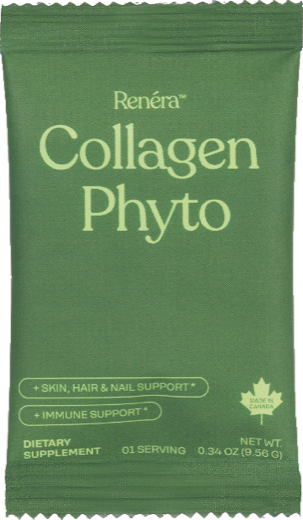
This research is relevant to Renéra™ Collagen Phyto because the formulation is designed as more than a traditional collagen supplement. It combines marine collagen peptides, acerola-derived vitamin C, antioxidant-rich phytonutrients, and LC-Plasma postbiotics within a modern wellness-focused formula.
These thoughtfully selected ingredients work together. They are designed to complement balanced daily habits. These habits support skin wellness, antioxidant support, and overall well-being from within.
What Are Postbiotics?
Postbiotics are preparations of inactivated microorganisms. Their components are studied for their potential role in supporting health and wellness. Unlike probiotics, which contain live microorganisms, postbiotics do not rely on live microbial activity after consumption.
Because they are not living organisms, postbiotics are generally more stable in formulations and may be less sensitive to factors such as heat, moisture, storage conditions, and digestion. This makes them well-suited for modern supplement formats including powders, sachets, capsules, and functional wellness blends.
Importantly, “non-living” does not mean biologically irrelevant. Emerging research suggests that certain inactivated microbial components may still interact with biological signaling pathways in the body, depending on the strain, formulation, and study area.
As interest in the gut–immune–skin connection continues to grow, postbiotics have become an increasingly researched category within modern nutritional science and wellness formulations.
What Is pDC?
pDC stands for plasmacytoid dendritic cells. These are a specialized subset of immune cells that play a key role in the innate immune system, which is involved in the body’s early immune signaling responses.
Research identifies pDCs as important cells in antiviral immune responses for their ability to produce large amounts of type I interferons, particularly interferon-alpha (IFN-α). These signaling proteins coordinate communication among immune cells during early immune activation.
In simple terms, pDCs can be understood as part of the body’s early detection and signaling network. They help recognize specific biological signals and contribute to the regulation of downstream immune responses.
Rather than “boosting” or overstimulating immune activity, pDC function is better understood in terms of immune balance and regulation. In nutritional and immunological research, pDC activity is studied as part of the broader network that helps the body respond appropriately to internal and external stressors, including environmental changes, physical exertion, travel, and seasonal variation.
1. Postbiotics Can Function Without Being Alive
A defining characteristic of postbiotics is that they do not require viability to interact with biological systems. Unlike probiotics, they are composed of inactivated microbial cells and structural components.
LC-Plasma postbiotic is commonly studied in a heat-inactivated form. In preclinical research, it has been observed to interact with immune-related cells, including plasmacytoid dendritic cells (pDCs), and to be associated with interferon-related signaling responses under experimental conditions.
This distinguishes LC-Plasma from traditional probiotics, where activity depends on microbial survival. Instead, its activity is linked to structural components rather than live metabolism.
From a formulation perspective, this supports stability and consistency in daily-use supplements such as Collagen Phyto.
2. LC-Plasma postbiotic May Be Recognized Through Microbial-Derived DNA
Another area of research examines how postbiotics may interact with immune cells via structural components, including microbial-derived DNA.
Components within inactivated bacterial cells, including DNA fragments, are studied under laboratory conditions. These studies suggest they may influence how immune cells respond. Immune cells, such as plasmacytoid dendritic cells (pDCs), are specifically observed. In these experimental settings, researchers have noted that pDCs produce interferon-alpha (IFN-α). This molecule is a key immune signaling component produced via a well-known recognition pathway called TLR9–MyD88. This pathway is part of the body’s natural system for identifying microbial genetic material.
In simple terms, this means immune cells like pDCs have built-in ways to detect specific patterns in microbes. These patterns include DNA-related signals. LC-Plasma has been studied in this context as a heat-inactivated strain. It may interact with these natural recognition systems. This interaction occurs in controlled research environments.
LC-Plasma postbiotic is not merely a general “immune support” ingredient. It is being explored in relation to specific, well-defined immune signaling pathways. This provides a clear rationale. It is considered a more targeted area of research within the broader field of postbiotics and immune science.
3. pDC Activation Is Associated With Interferon-Related Signaling
Plasmacytoid dendritic cells (pDCs) are closely associated with interferon signaling, particularly the production of type I interferons. Interferons are signaling proteins that play an important role in communication within the innate immune system.
Lactococcus lactis JCM5805, a heat-inactivated strain, was studied in a related context. Research published in Clinical Immunology reported that this strain interacted with human pDCs. It induced interferon production in in vitro studies. Additional research on LC-Plasma has further explored this pathway. It suggests that interferon-alpha (IFN-α) responses in pDCs may be associated with microbial-derived DNA. This association could also involve the activation of the TLR9–MyD88 signaling pathway under experimental conditions.
These findings describe a specific area of interest in immunology. They explore how inactivated microbial components may interact with innate immune signaling pathways. These pathways are involved in interferon-mediated responses.
4. Human Research Explores LC-Plasma postbiotic and pDC-Related Immune Responses
LC-Plasma postbiotic has been evaluated beyond in vitro and mechanistic studies. It has also been assessed in human clinical research. These studies explore its relationship with immune-related responses in healthy adults.
A 2025 individual participant data meta-analysis of randomized controlled trials examined the effects of oral LC-Plasma postbiotic intake. The analysis reported associations between LC-Plasma postbiotic supplementation and pDC-related immune activity. It also noted differences in self-reported upper respiratory symptom outcomes in healthy adult populations.
These findings contribute to a growing body of human research. This research investigates how inactivated microbial strains may interact with immune signaling pathways. These pathways include those involving plasmacytoid dendritic cells.
It is crucial to understand the LC-Plasma postbiotic from both regulatory and scientific perspectives. It is not intended to diagnose, treat, cure, or prevent disease. Rather, current research explores its role in supporting normal immune function and immune-related biological responses within healthy populations.
Accordingly, a scientifically responsible way to describe this ingredient is:
LC-Plasma has been studied in human research. It is studied for its relationship with pDC-related immune responses. It is also studied for markers of immune resilience in healthy adults.
5. LC-Plasma postbiotic in a Multi-Pathway Wellness Formula
Renéra™ Collagen Phyto is positioned as a multi-nutrient wellness formulation that goes beyond collagen alone.
Marine collagen peptides provide amino acids associated with skin structure. Vitamin C contributes to normal collagen formation and supports antioxidant nutrition. Phytonutrients provide compounds that support the body’s natural defenses against oxidative stress. LC-Plasma postbiotic has been studied in relation to pDC-associated immune signaling pathways.
These components reflect a multi-dimensional approach to beauty-from-within nutrition. They combine structural support, nutritional cofactors, and antioxidant intake. They also incorporate emerging postbiotic science.
Postbiotics vs. Probiotics: Key Difference
Probiotics are live microorganisms that, when administered in adequate amounts, are intended to confer a health benefit on the host. Their function depends on viability.
Postbiotics, in contrast, are non-viable microbial preparations or components. They are generally more stable and less sensitive to environmental conditions such as heat and moisture.
This distinction is relevant to LC-Plasma postbiotic. It is used in a heat-inactivated form. Researchers have studied it in relation to immune signaling pathways involving plasmacytoid dendritic cells (pDCs).
Why This Matters for Beauty-From-Within
Beauty and immune science are often discussed separately, but in human biology, they exist within interconnected physiological systems. Various factors, such as stress and sleep quality, can influence overall well-being. Environmental exposure and seasonal changes also play a role. Additionally, oxidative load impacts skin appearance.
This is why multi-nutrient formulations like Collagen Phyto are positioned as alternatives to single-ingredient approaches. The formula brings together complementary nutritional components. These components are involved in various aspects of skin and wellness biology rather than focusing on a single pathway.
Marine collagen peptides provide amino acids that support the skin’s structural framework. Vitamin C from acerola contributes to normal collagen formation and also supports antioxidant nutrition. Phytonutrients provide antioxidant compounds that help support the body’s natural defenses against oxidative stress. LC-Plasma postbiotic has been studied in relation to immune signaling pathways. These pathways involve plasmacytoid dendritic cells (pDCs). This represents an emerging area of postbiotic research.
Together, these components reflect a multi-dimensional approach to beauty-from-within nutrition. This approach combines structural support and nutritional cofactors. It also includes antioxidant intake and emerging microbiome-derived science within a single daily formula.
Rather than focusing on isolated functions, this approach adopts a broader view. It sees beauty nutrition as part of overall lifestyle and physiological balance.
Conclusion
Postbiotics represent an emerging area of microbiome-derived nutritional science. Unlike probiotics, they do not rely on live microorganisms, allowing for greater stability in formulation and daily use.
LC-Plasma has been studied in experimental and clinical research settings. Researchers have focused on its relationship with plasmacytoid dendritic cells (pDCs) and interferon-related immune signaling pathways.
Within Renéra™ Collagen Phyto, LC-Plasma postbiotic is combined with collagen peptides, vitamin C, and antioxidant phytonutrients. This creates a multi-dimensional wellness formulation. The focus is on structural beauty, nutrition, and overall dietary balance.
Together, these components reflect a modern approach to daily wellness that integrates beauty nutrition, antioxidant support, and emerging postbiotic science.
FAQ
What are postbiotics?
Postbiotics are inanimate microorganisms or microbial components that can provide a health benefit. Unlike probiotics, they do not need to be alive to work.
What is pDC?
pDC stands for plasmacytoid dendritic cells, a type of immune cell involved in natural immune defense signaling.
How does LC-Plasma posbiotics support immunity?
LC-Plasma has been studied for its ability to activate pDC and support interferon-related immune signaling.
How is this related to Collagen Phyto?
Collagen Phyto includes LC-Plasma postbiotic. It supports immune resilience. The product combines marine collagen peptides, vitamin C, and antioxidant-rich phytonutrients. These ingredients are for beauty and wellness from within.
References & Clinical Citations
- Postbiotics Definition & Scientific Consensus — The ISAPP consensus statement defines postbiotics in a specific way. They are preparations of inanimate microorganisms. These microorganisms and/or their components confer a health benefit on the host. Nature Reviews Gastroenterology & Hepatology. https://doi.org/10.1038/s41575-021-00440-6
- Immunomodulatory Effect of Lactococcus lactis JCM5805 — This study reported that Lactococcus lactis JCM5805 activated human pDC. It induced interferon production in vitro. Clinical Immunology. https://doi.org/10.1016/j.clim.2013.10.007
- LC-Plasma and TLR9–MyD88 Pathway — This study reported that IFN-α
production by pDC increased because of LC-Plasma-derived DNA. This process
depended on the TLR9-MyD88 pathway. BMC Microbiology.
https://doi.org/10.1186/s12866-019-1458-y - LC-Plasma and pDC Activation Meta-Analysis — This meta-analysis utilized individual participant data. It evaluated randomized controlled trials on oral LC-Plasma intake. It reported pDC activation and immune-related outcome measures in healthy adults. Frontiers in Immunology. https://doi.org/10.3389/fimmu.2025.1696989
Explore Renéra Collagen Phyto. It is a daily beauty-from-within ritual that combines marine collagen peptides and natural vitamin C. It also includes antioxidant-rich phytonutrients and LC-Plasma postbiotic. These ingredients work together to support beauty, vitality, and immune resilience from within.