For years, probiotics have been one of the most familiar terms in gut health. Now, the question of postbiotics vs probiotics has become just as relevant for modern supplement shoppers.
At first, the two words sound similar. Both are connected to microbiome science. Both are discussed in relation to gut wellness and immune-related research. But they are not the same. Understanding postbiotics vs probiotics is increasingly relevant for anyone navigating the modern supplement market.
The main difference is simple:
Probiotics are live microorganisms. Postbiotics are non-living microbial preparations or components.
That difference matters. It affects how an ingredient is made, stored, transported, formulated, labeled, and used in daily wellness products.
This article explains the difference between probiotics and postbiotics, why “live” versus “non-living” is important, and how postbiotics fit into modern clean label supplement formats.
What Are Probiotics?
Probiotics are live microorganisms that, when taken in adequate amounts, are intended to provide a health-related benefit to the host. The NIH Office of Dietary Supplements relies on a popular definition from the International Scientific Association for Probiotics and Prebiotics. This definition states that probiotics are “live microorganisms.” When they are administered in adequate amounts, they confer a health benefit on the host.
Common probiotic formats include:
- Yogurt and kefir
- Fermented foods
- Capsules
- Powders
- Functional beverages
- Dietary supplements
Because probiotics are live, their identity, amount, strain, and viability matter. A probiotic product is not just about having bacteria listed on a label. For probiotics, the microorganisms must remain alive in sufficient numbers throughout manufacturing, storage, and use.
This is why probiotic labels often refer to CFUs, or colony-forming units. The FDA has discussed CFUs. They consider it a useful way to describe the amount of living microorganisms. This is especially relevant in dietary supplements containing live microbial ingredients.
In other words, probiotics are closely tied to viability.

What Are Postbiotics?
Postbiotics differ from live microorganisms.
The ISAPP consensus statement was published in Nature Reviews Gastroenterology & Hepatology. A postbiotic is defined as a “preparation of inanimate microorganisms and/or their components.” These preparations confer a health benefit on the host. The same consensus paper clarifies that postbiotics are deliberately inactivated microbial cells. They may or may not contain metabolites or cell components. These elements contribute to the demonstrated health-related benefit.
In simpler terms, postbiotics may include:
- Inactivated microbial cells
- Microbial cell structures
- Fermentation-related components
- Specific microbial-derived materials, depending on the ingredient
The key point is that postbiotics do not need to be alive in the final product.
That makes postbiotics especially relevant for supplement formats where stability, convenience, and clean label formulation are important.
The Core Difference: Postbiotics vs Probiotics
The biggest difference between probiotics and postbiotics is not their place in the wellness category. It is their biological status.
| Category | Probiotics | Postbiotics |
|---|---|---|
| Microbial status | Live microorganisms | Inanimate microorganisms and/or components |
| Main formulation focus | Viability | Characterized preparation |
| Labeling focus | Strain, CFU, shelf life, storage | Strain/source, preparation, research context |
| Storage sensitivity | May require careful handling | Often more flexible in dry or shelf-stable formats |
| Common formats | Yogurt, fermented foods, capsules, refrigerated products | Powders, sachets, capsules, beverage mixes |
| Consumer question | “Are the microorganisms still alive?” | “What is the postbiotic source and research context?” |
The table above captures the postbiotics vs probiotics divide at a glance. One category depends on live-cell viability. The other does not.
This does not mean one category is automatically better than the other. Probiotics and postbiotics serve different formulation purposes.
A probiotic product may be appropriate when the goal is to deliver live microorganisms. A postbiotic product may be appropriate. It is suitable when the goal is to include a microbiome-informed ingredient. This type of ingredient does not rely on live-cell viability.
Why “Alive” Matters: The Probiotics Side of the Postbiotics vs Probiotics Divide
Because probiotics are living microorganisms, the product experience is shaped by several factors:
- Strain selection
- CFU level
- Storage conditions
- Moisture exposure
- Heat exposure
- Shelf-life dating
- Delivery format
- Manufacturing quality
Scientific and regulatory discussions around probiotics often focus on viability because live microorganisms can be affected by time and environment. FDA guidance notes that many supplements described as probiotics contain live microbial ingredients. CFUs can help indicate the number of living microorganisms in a product.
This does not make probiotics “bad” or outdated. It simply means probiotic products require careful formulation and handling.
For consumers, this is why it can be helpful to check:
- The specific strain
- CFU amount
- Expiration date
- Storage instructions
- Whether the product format matches their routine
A probiotic supplement is not defined only by the word “probiotic.” The details matter.
Why “Non-Living” Matters: The Postbiotics Side
Postbiotics are not dependent on live-cell survival in the same way. Because they are inanimate microbial preparations or components, they may be easier to include in certain modern wellness formats, especially dry powders, sachets, capsules, and beverage mixes.
This makes postbiotics relevant for clean label product development.
Clean label consumers often look for products that feel:
- Simple
- Practical
- Transparent
- Easy to use daily
- Compatible with travel or busy routines
- Supported by clear ingredient information
Postbiotics can fit that direction because they may offer practical formulation advantages. They do not need the same viability-focused storage approach as live probiotics.
However, “non-living” does not mean vague. A strong postbiotic product should still identify the ingredient clearly, use responsible language, and connect claims to appropriate scientific context.
Do Postbiotics Replace Probiotics?
One of the most common questions in the postbiotics vs probiotics conversation is whether one replaces the other. The answer is no — they are different categories.
They are different categories.
Probiotics are defined by live microorganisms. Postbiotics are defined by inanimate microorganisms and/or their components. The choice between a probiotic and a postbiotic depends on several factors. These include the product goal, ingredient research, dose, format, and intended daily routine.
A helpful way to understand the difference:
Probiotics: live microorganisms used in foods or supplements. Postbiotics: non-living microbial preparations or components studied in specific wellness contexts. Prebiotics: substrates, often fibers, used by beneficial microorganisms.
The best choice depends on the formulation, not the trend.
For example, a refrigerated fermented food may be a natural place for probiotics. A shelf-stable collagen powder or daily wellness sachet may be a practical place for a postbiotic ingredient.
Why Postbiotics Are Showing Up in Clean Label Wellness
To understand why the postbiotics vs probiotics distinction matters in practice, it helps to look at each category separately.
In this context, postbiotics are becoming interesting because they can align with several clean label priorities:
- Stability in daily-use formats — Since postbiotics are not live microorganisms, they may be easier to formulate into powders, capsules, and beverage blends.
- Convenience for modern routines — Many consumers want supplements that fit into a morning drink, travel bag, or simple daily ritual.
- Clearer formulation design — Postbiotics can allow brands to focus on a characterized ingredient rather than live-cell survival.
- Microbiome-informed positioning — Postbiotics connect to microbiome science while offering a different ingredient format than probiotics.
- Compatibility with multi-ingredient formulas — Postbiotics can be included alongside collagen peptides, vitamin C, botanical extracts, or antioxidant-rich phytonutrients when the formulation is designed thoughtfully.
This is one reason postbiotics are becoming more visible in beauty-from-within and wellness products.
What About LC-Plasma?
LC-Plasma, also known as Lactococcus lactis strain Plasma, is a postbiotic ingredient used in a heat-inactivated form.
A previous Renéra article explored LC-Plasma and pDC immune research in more detail, including pDC-related immune markers and interferon-related signaling. That article positioned LC-Plasma as an ingredient studied for its relationship with immune-related pathways, rather than as a general “quick result” ingredient.
For this comparison article, the key point is simpler:
LC-Plasma helps illustrate how postbiotics differ from probiotics.
Unlike probiotics, LC-Plasma does not depend on live-cell survival in the final product. Its research context concerns heat-inactivated microbial components and their relationship to immune-related markers.
A 2013 study in Clinical Immunology evaluated Lactococcus lactis JCM5805 in relation to human plasmacytoid dendritic cells in vitro. A more recent 2025 individual participant data meta-analysis in Frontiers in Immunology evaluated oral LC-Plasma intake in randomized controlled trials. It reported pDC-related outcomes. It also presented seasonal wellness-related outcomes in healthy adults.
The careful way to communicate this is:
LC-Plasma has been studied in relation to pDC-related immune markers and seasonal wellness outcomes in healthy adult populations.*
*Outcomes may vary depending on lifestyle, diet, sleep, stress, and individual health.
Probiotics vs Postbiotics in Supplement Formulation
From a formulation standpoint, the postbiotics vs probiotics difference shapes how each ingredient is manufactured, stored, and labeled.
Probiotics in supplements
Probiotic formulation often requires attention to:
- Microbial strain identity
- Live count
- Shelf-life stability
- Packaging
- Moisture control
- Temperature exposure
- Labeling accuracy
The live nature of probiotics is central to their category. That is why discussions of probiotic quality often involve CFU counts and viability throughout shelf life.
Postbiotics in supplements
Postbiotic formulation often focuses on:
- Ingredient identity
- Inactivation method
- Characterized preparation
- Research-supported dose
- Compatibility with other ingredients
- Stability in the chosen format
This makes postbiotics well-suited for supplement products where convenience and consistency are important.
Again, this does not mean postbiotics are universally better. It means they may be more practical for certain supplement formats.
Why the Difference Matters for Consumers
For everyday shoppers, the postbiotics vs probiotics question comes down to reading labels more clearly.
When choosing a probiotic, consumers may want to ask:
- What strains are included?
- How many CFUs are provided?
- Is the CFU count listed through the end of shelf life?
- Does the product require special storage?
- Is the product format realistic for daily use?
When choosing a postbiotic, consumers may want to ask:
- What postbiotic ingredient is used?
- Is the strain or microbial source identified?
- Is it supported by human or mechanistic research?
- What dose is used?
- How does it fit into the full formula?
These questions help move the conversation beyond trendy ingredient names and toward a clearer understanding of the product.
Where Renéra Collagen Phyto Fits In
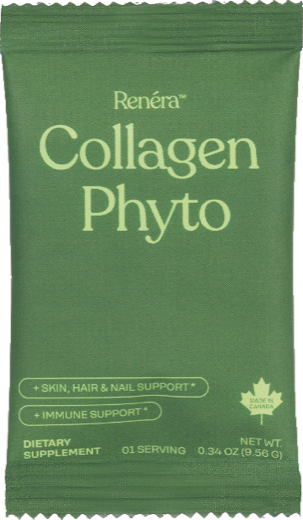
Renéra Collagen Phyto includes LC-Plasma as part of a multi-pathway formula designed to support healthy aging, skin radiance, and overall wellness from within. The formula combines marine collagen peptides, a postbiotic ingredient studied in clinical research, and antioxidant-rich phytonutrients in a daily wellness format.
This is where the postbiotic difference matters in a practical sense.
Because LC-Plasma is used as a postbiotic ingredient, it fits naturally into a powder-based daily ritual. It does not depend on being a live probiotic culture in the final serving.
Collagen Phyto also includes:
- Marine collagen peptides
- Acerola-derived vitamin C
- Antioxidant-rich phytonutrient extracts
- LC-Plasma postbiotic
The product is positioned as a beauty-from-within and daily wellness formula, not a probiotic product. Its postbiotic component supports the formula’s broader focus on modern wellness, convenience, and clean label ingredient design. Learn more about Renéra Collagen Phyto.
Final Takeaway
The difference between probiotics and postbiotics comes down to one central idea:
Probiotics are live. Postbiotics are not live.
That difference affects storage, formulation, labeling, stability, and how each ingredient fits into daily wellness products.
Probiotics remain an important category in microbiome science, especially when live microbial supplementation is the goal. Postbiotics offer a different approach: non-living microbial preparations or components that may be easier to formulate into shelf-stable, clean label products.
For consumers, the most important thing is not choosing the trendiest word. It is understanding what the ingredient is, how it is used, and whether the product communicates its science responsibly.
In modern wellness, clarity matters. And when it comes to postbiotics vs probiotics, the clearest starting point is this: live and non-living are not small details. They are the foundation of the difference.
FAQ
1. What is the main difference between probiotics and postbiotics? The postbiotics vs probiotics difference comes down to biological status: probiotics are live microorganisms, postbiotics are inanimate microorganisms and/or their components. This affects formulation, storage, and the use of each ingredient in supplements.
2. Are postbiotics the same as probiotics? No. They are related to microbiome science, but they are different categories. Probiotics rely on live microorganisms, whereas postbiotics do not require live-cell viability.
3. Are postbiotics better than probiotics? Not necessarily. They serve different formulation purposes. Probiotics may be appropriate when live microorganisms are the goal. Postbiotics may be appropriate when a non-living, microbiome-informed ingredient fits the product format.
4. Why are postbiotics used in clean label supplements? Postbiotics may be useful in clean label supplements because they can fit well into powder, capsule, sachet, and beverage formats. They may also support simpler daily-use routines.
5. Is LC-Plasma a probiotic or postbiotic? LC-Plasma is used as a postbiotic ingredient in heat-inactivated form. It has been studied in relation to pDC-related immune markers and seasonal wellness outcomes in healthy adults.*
6. How is this connected to Renéra Collagen Phyto? Renéra Collagen Phyto includes LC-Plasma postbiotic as part of a formula that also features marine collagen peptides, acerola-derived vitamin C, and antioxidant-rich phytonutrients. It is designed as a daily beauty-from-within and wellness formula.
*Outcomes may vary depending on lifestyle, diet, sleep, stress, and individual health.
References & Clinical Citations
- Probiotics Definition — NIH Office of Dietary Supplements: Defines probiotics as live microorganisms that, when administered in adequate amounts, are intended to provide a health-related benefit to the host. https://ods.od.nih.gov/factsheets/Probiotics-HealthProfessional/
- Postbiotics Definition — ISAPP Consensus Statement (Nature Reviews Gastroenterology & Hepatology): Defines postbiotics as preparations of inanimate microorganisms and/or their components. https://doi.org/10.1038/s41575-021-00440-6
- FDA Draft Guidance on Live Microbial Dietary Supplements: Discusses CFUs as a useful measure for describing the amount of living microorganisms in dietary supplements. https://www.fda.gov/regulatory-information/search-fda-guidance-documents/draft-guidance-industry-dietary-supplements-containing-live-microbial-ingredients
- Lactococcus lactis JCM5805 & pDC — Clinical Immunology: Evaluating Lactococcus lactis JCM5805 in relation to human plasmacytoid dendritic cells. https://doi.org/10.1016/j.clim.2013.10.007
- LC-Plasma Meta-Analysis — Frontiers in Immunology (2025): Individual participant data meta-analysis evaluating oral LC-Plasma intake in randomized controlled trials in healthy adults. https://doi.org/10.3389/fimmu.2025.1696989